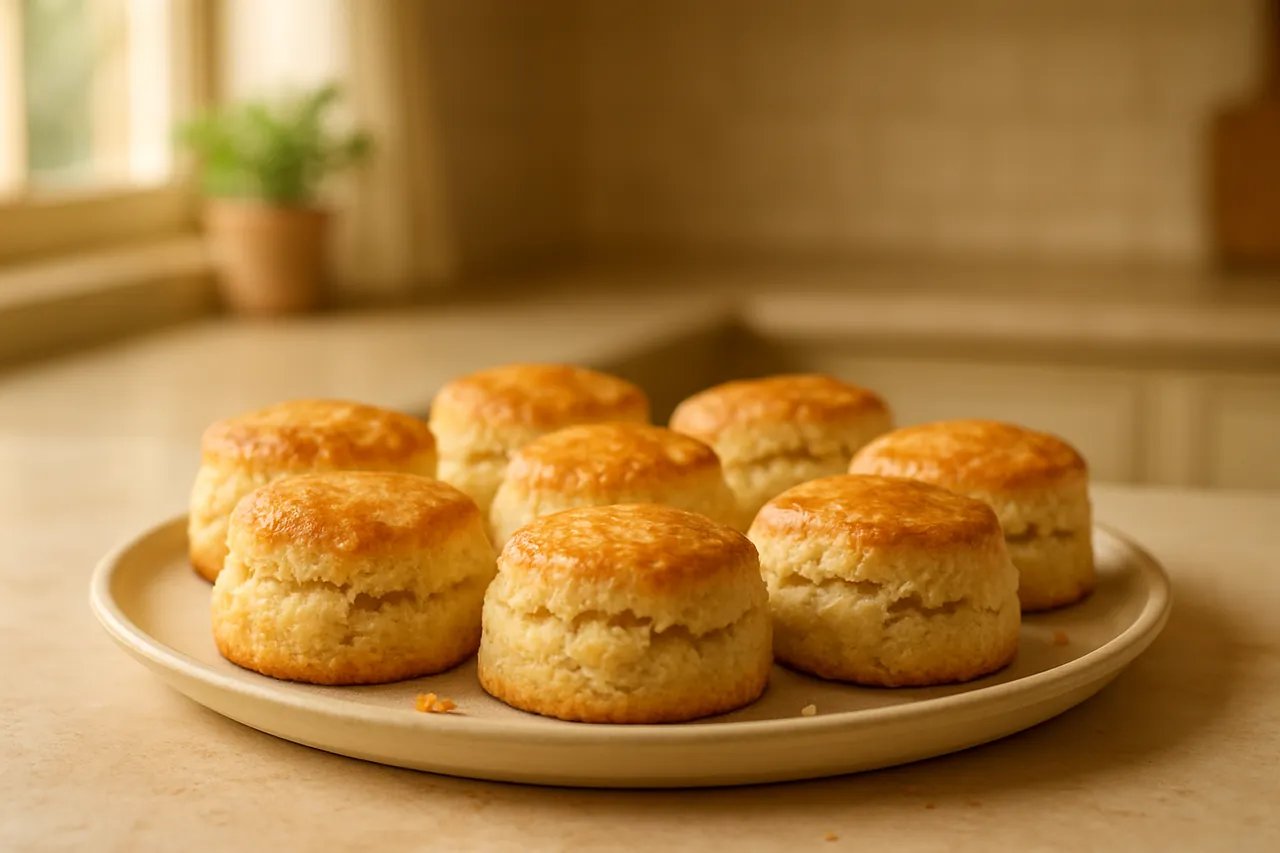
Tender and fluffy interior with a golden, slightly crisp exterior.
These classic British scones are tender, buttery, and perfect for a cozy afternoon tea. With a golden crust and a soft, fluffy interior, they're a delightful treat that pairs beautifully with clotted cream and jam.
Why you'll want it now, Perfectly paired with clotted cream and jam for a nostalgic tea-time treat.
Why this recipe works
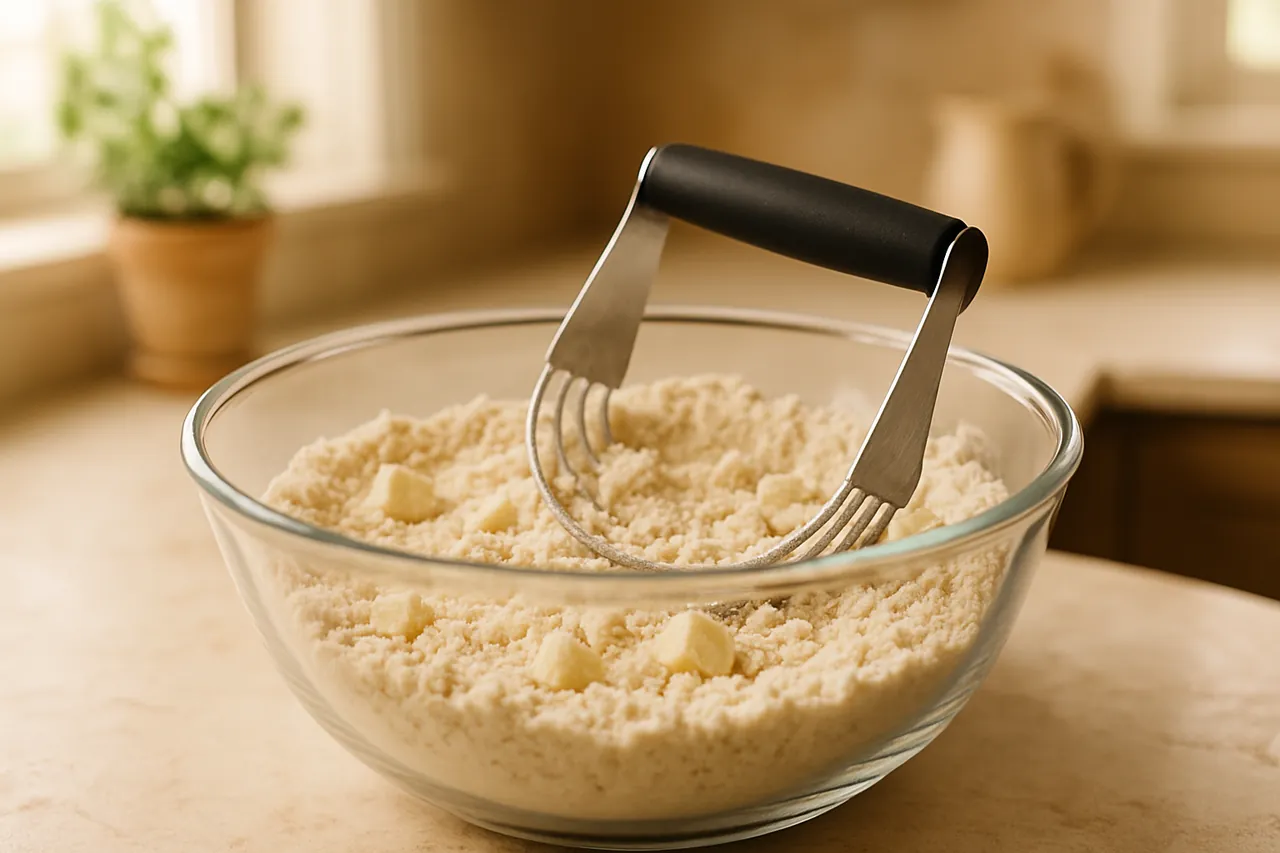
The secret to these scones is the use of cold butter, which creates flaky layers as it melts during baking, and a touch of sugar for a hint of sweetness.
Equipment
Mixing bowls
Pastry cutter or fork
Baking sheet
Parchment paper
Pastry brush
How to make it
Preheat the oven to 425°F (220°C). Line a baking sheet with parchment paper.
In a mixing bowl, combine the flour, sugar, baking powder, and salt.
Add the cold, cubed butter to the dry ingredients. Use a pastry cutter or fork to cut the butter into the flour mixture until it resembles coarse crumbs.
In a small bowl, whisk together the milk and egg. Reserve a tablespoon for brushing the tops.
Pour the milk mixture into the dry ingredients, stirring gently until just combined.
Turn the dough out onto a lightly floured surface. Knead gently a few times until the dough comes together.
Pat the dough into a round, about 1 inch (2.5 cm) thick. Use a round cutter to cut out scones, re-rolling scraps as needed.
Place the scones on the prepared baking sheet. Brush the tops with the reserved milk and egg mixture.
Bake for 12-15 minutes, or until the scones are golden brown and risen.
Enjoy these classic British scones with your favorite tea and a generous spread of clotted cream and jam. Perfect for a cozy afternoon treat.
How you'll know it's ready
The scones are ready when they are golden brown on top and have risen well.
Convection oven? (and if you don't have one)
If using a convection oven, lower the temperature by 25°F (about 15°C) and check a few minutes early, as they may bake faster. Standard ovens should follow the temperature as written.
Troubleshooting
If scones are too dense, ensure the butter is cold and not overmixed into the flour.
For dry scones, check that the dough is not overworked and add a splash more milk if needed.
If scones spread too much, ensure the dough is chilled before baking.
Storage
Store scones in an airtight container at room temperature for up to 2 days. For best texture, reheat before serving.
Make ahead
Prepare the dough in advance, cut into scones, and freeze. Bake from frozen, adding a few extra minutes to the baking time.
Variations
Add 1/2 cup (75 g) of raisins or currants for a traditional twist.
Mix in 1 teaspoon of vanilla extract for added flavor.
Top with a sprinkle of coarse sugar before baking for extra sweetness.
Frequently asked questions
Can I use a food processor to make scone dough?
Yes, you can use a food processor to cut the butter into the flour mixture, but be careful not to over-process. Pulse until the mixture resembles coarse crumbs.
How do I keep my scones from spreading too much?
Ensure your butter is cold and the dough is chilled before baking. This helps maintain the scone's shape.
Can these scones be made with gluten-free flour?
Yes, you can substitute with a gluten-free all-purpose flour blend. The texture may vary slightly.
What is the best way to reheat scones?
Reheat scones in a preheated oven at 350°F (175°C) for about 5 minutes, or until warmed through.
Nutrition Facts
Per serving: 1 scone (75 g)
Calories220
Total Fat10 g
Saturated Fat6 g
Cholesterol45 mg
Sodium250 mg
Total Carbohydrate28 g
Dietary Fiber1 g
Total Sugars4 g
Protein4 g
Nutrition information is estimated based on the ingredients used and may vary depending on brands and exact measurements.
Recipe from softsweetdough.com · Soft, sweet desserts worth every bite.