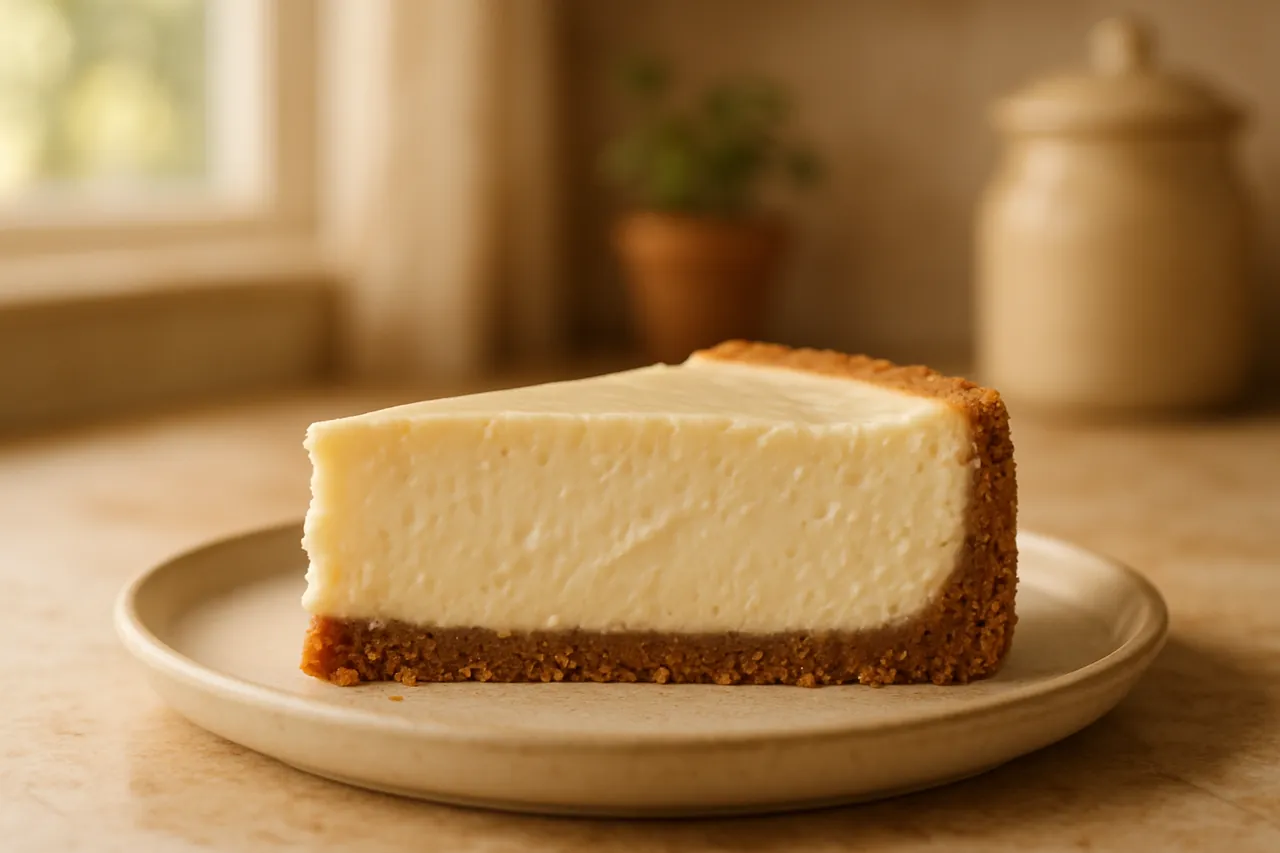
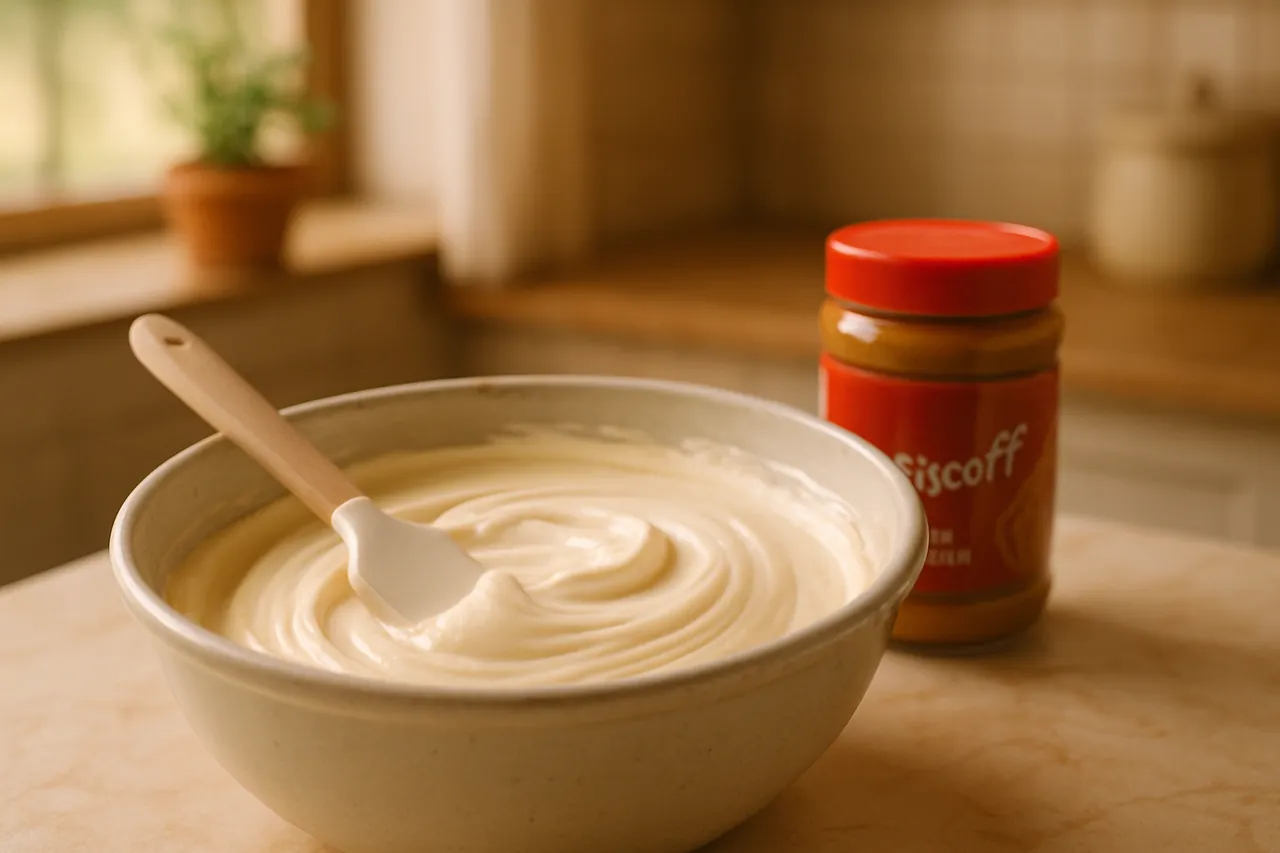
Smooth, creamy cheesecake with a slightly crunchy, spiced cookie crust.
This Biscoff Cookie-Butter Cheesecake is a decadent treat, combining the rich, creamy texture of a classic cheesecake with the distinct spiced flavor of Biscoff cookies and cookie butter.
Why you'll want it now, The combination of creamy cheesecake and spiced Biscoff cookies makes this a must-try for cookie butter lovers.
Why this recipe works
The Biscoff cookies in the crust provide a spiced, buttery base that perfectly complements the creamy, rich filling made with cookie butter for a delightful twist on traditional cheesecake.
Equipment
9-inch (23 cm) springform pan
mixing bowls
electric mixer
rubber spatula
measuring cups and spoons
parchment paper
baking sheet
How to make it
Preheat your oven to 325°F (163°C). Line the bottom of a 9-inch (23 cm) springform pan with parchment paper.
In a bowl, combine Biscoff cookie crumbs, granulated sugar, and melted butter. Press the mixture firmly into the bottom of the prepared pan to form the crust.
Bake the crust for 10 minutes, then remove from the oven and let it cool while you prepare the filling.
In a large mixing bowl, beat the softened cream cheese until smooth and creamy.
Add granulated sugar and continue beating until well combined.
Mix in the Biscoff cookie butter, sour cream, and vanilla extract until fully incorporated.
Add the eggs one at a time, beating on low speed after each addition just until combined. Avoid overmixing.
Pour the filling over the cooled crust, smoothing the top with a spatula.
Place the springform pan on a baking sheet and bake in the preheated oven for 1 hour, or until the edges are set and the center jiggles slightly when shaken.
Turn off the oven, crack the door open slightly, and let the cheesecake cool in the oven for 1 hour.
Remove the cheesecake from the oven and let it cool to room temperature.
Refrigerate for at least 4 hours or overnight before serving.
Enjoy this rich and creamy Biscoff Cookie-Butter Cheesecake, perfect for a cozy gathering or a special treat.
How you'll know it's ready
The cheesecake is ready when the edges are set and the center jiggles slightly when the pan is gently shaken.
Convection oven? (and if you don't have one)
If using a convection oven, lower the temperature to 300°F (149°C) and start checking the cheesecake a few minutes earlier, as convection ovens can bake more quickly.
Troubleshooting
If the cheesecake cracks, ensure the cream cheese is at room temperature before mixing and avoid overmixing the batter.
If the crust is too crumbly, press it more firmly into the pan before baking.
If the cheesecake is too soft, make sure it chills for at least 4 hours before serving.
If the top browns too quickly, tent with foil during the last 15 minutes of baking.
Storage
Store leftovers in the refrigerator for up to 5 days. For longer storage, wrap slices tightly and freeze for up to 2 months.
Make ahead
This cheesecake can be made a day in advance and stored in the refrigerator until ready to serve.
Variations
Add a chocolate ganache topping for extra indulgence.
Swirl in some melted chocolate into the filling for a marbled effect.
Top with whipped cream and crushed Biscoff cookies for added texture.
Frequently asked questions
Can I use a different type of cookie for the crust?
Yes, graham crackers or digestive biscuits can be used, but the flavor will differ.
How do I prevent my cheesecake from cracking?
Ensure the cream cheese is at room temperature and avoid overmixing the batter. Cooling the cheesecake gradually in the oven with the door slightly open also helps.
Can I make this cheesecake without a springform pan?
A deep-dish pie pan can be used as an alternative, but it may be more challenging to remove the cheesecake cleanly.
What is the best way to cut the cheesecake?
Use a sharp knife dipped in hot water and wiped clean between each cut for neat slices.
Nutrition Facts
Per serving: 1 slice (140 g)
Calories670
Total Fat47 g
Saturated Fat27 g
Cholesterol165 mg
Sodium360 mg
Total Carbohydrate54 g
Dietary Fiber1 g
Total Sugars41 g
Protein9 g
Nutrition information is estimated based on the ingredients used and may vary depending on brands and exact measurements.
Recipe from softsweetdough.com · Soft, sweet desserts worth every bite.